Feast of the Archangels
One of my favorite feast days. Come meet these heavenly guides and warriors.

Over the years I’ve become fond of saying that every day is a holiday in the Catholic Church. That’s because the Church has numerous feast days that honor saints, martyrs, holy days, and angels. I have to admit, though, that my favorite time of year may be the end of September and the beginning of October because there are so many wonderful feast days. In that short span we celebrate St. Vincent de Paul on September 27, St. Jerome on September 30, St. Thérèse of Lisieux on October 1, the Guardian Angels on October 2, St. Francis on Octobe 4, St. Faustina Kowalska on October 5, and Our Lady of the Rosary on October 7. One of my all-time favorites is Michaelmas, the Feast of St. Michael, which, starting in 1969, has come to be celebrated as the Feast of the Archangels.
Here’s a short primer on the archangels and the three angels named in the Bible.
The Archangels: Messengers and Guardians
Archangels may refer to two different types of angels. Most often they are understood as members of the second-to-lowest order of angels, yet they remain powerful celestial beings who act as messengers and guardians of humanity.
The term archangel comes from the Greek archē, meaning “chief,” and angelos, meaning “messenger” or “angel.” Some theologians and exorcists hold that the title refers not to a lower order but to the mightiest angels ever created, charged with overseeing all other angelic ranks.
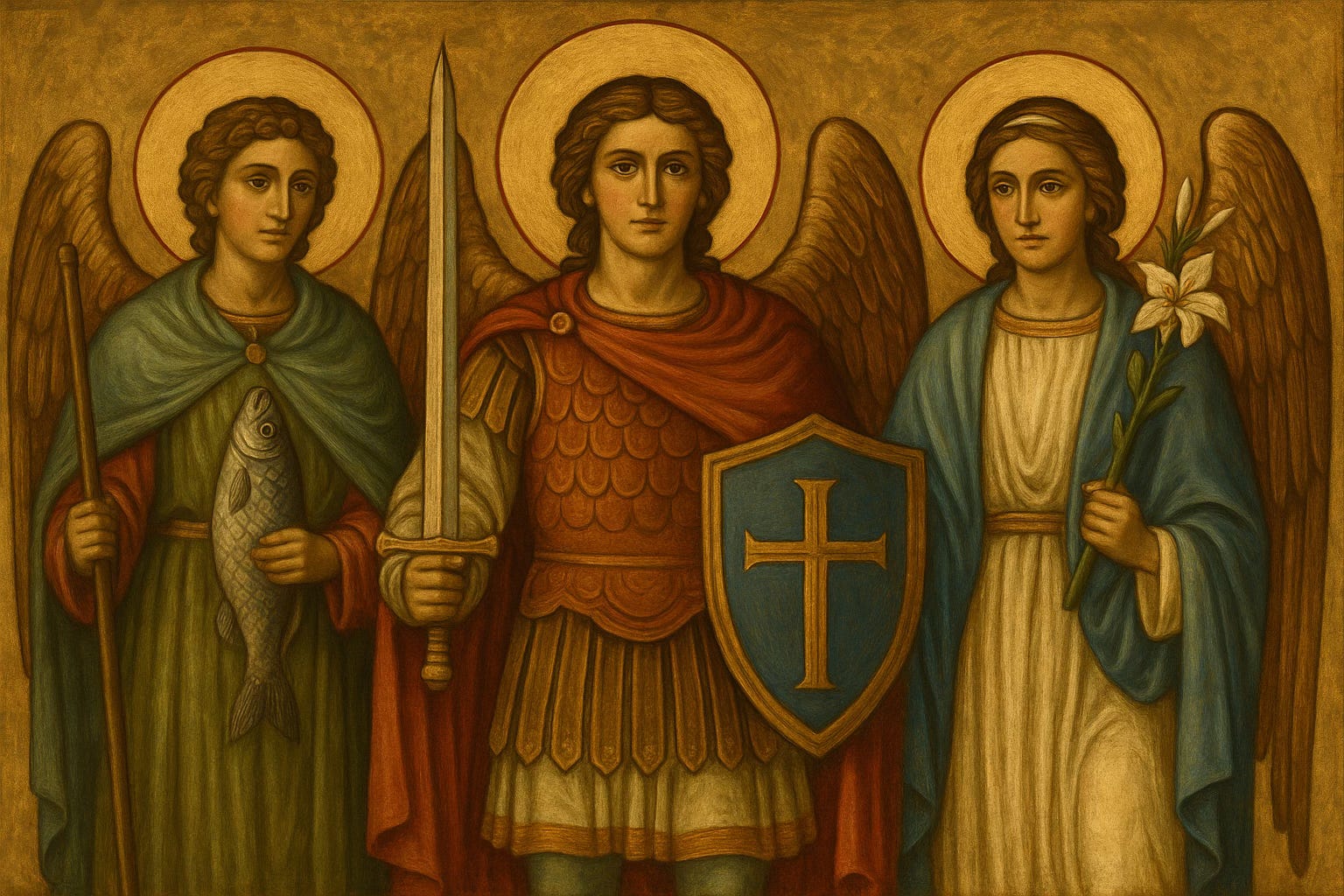
Believers call upon archangels in prayer for guidance, protection, and support during times of trial. The New Testament mentions the word archangel only twice. In 1 Thessalonians 4:16, Paul comforts the early Christians who worried about the fate of the dead before Christ’s return. Paul writes that the moment Christ descends from heaven, marked by the call of the archangel and the sound of God’s trumpet, the dead in Christ will rise.
The second reference appears in Jude 1:9, which describes the archangel Michael contending with the devil over the body of Moses: “But when the archangel Michael, contending with the devil, was disputing about the body of Moses, he did not presume to pronounce a blasphemous judgment, but said, ‘The Lord rebuke you.’” This verse echoes an event from a Jewish apocryphal text known as the Assumption of Moses and underscores Michael’s humility and restraint—offering an implicit lesson about judging others.
The Catholic Church officially names three archangels: Michael, Gabriel, and Raphael. The Eastern Orthodox tradition recognizes four additional ones:
Uriel, angel of light and wisdom
Selaphiel, angel of prayer and devotion
Jegudiel, angel of mercy and benevolence
Barachiel, angel of blessings and prosperity
Since I’m Catholic, today’s post is going to focus on the Big Three—angelic warriors, messengers, and enemy of demons.
St. Michael: Defender and Leader of the Heavenly Host
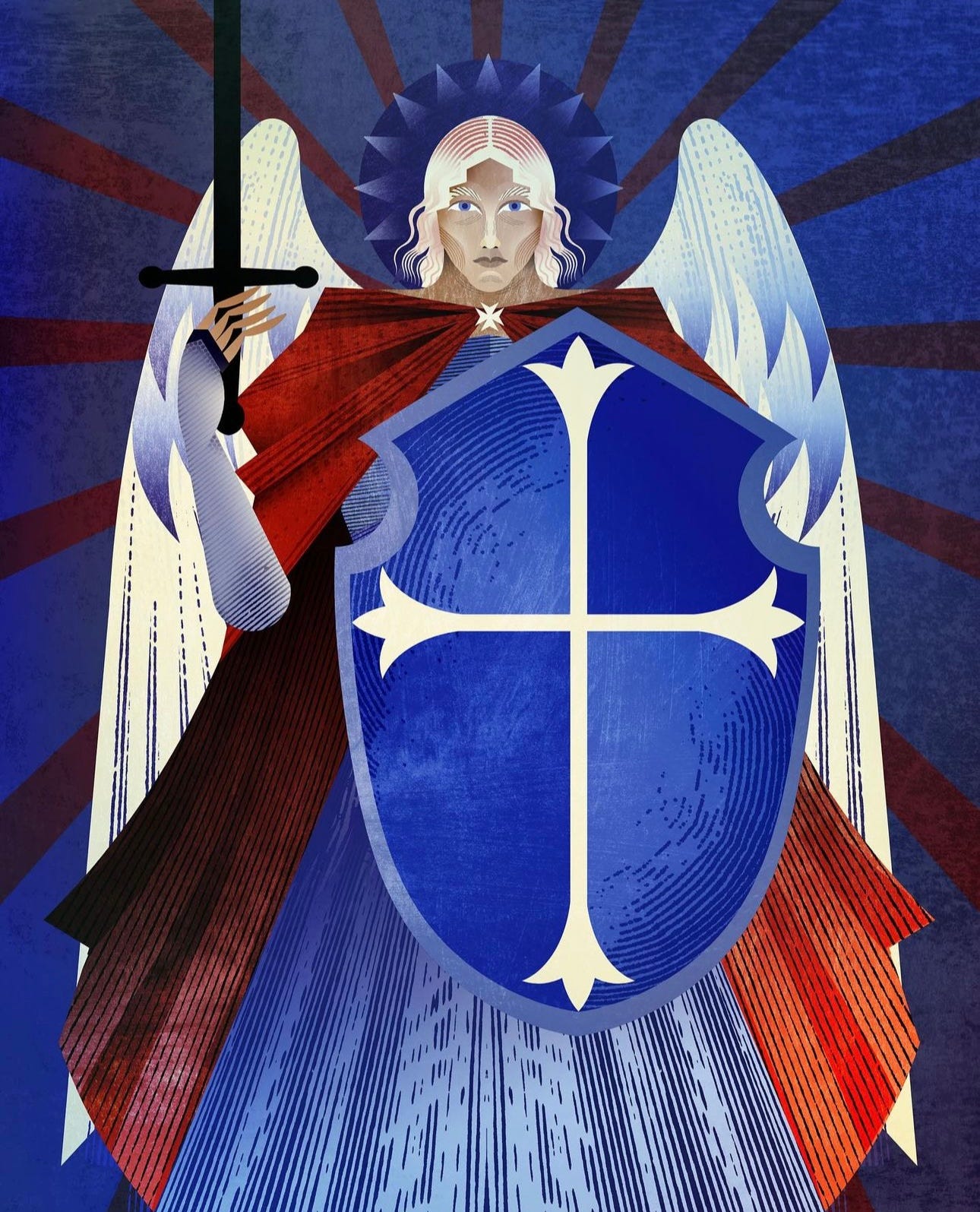
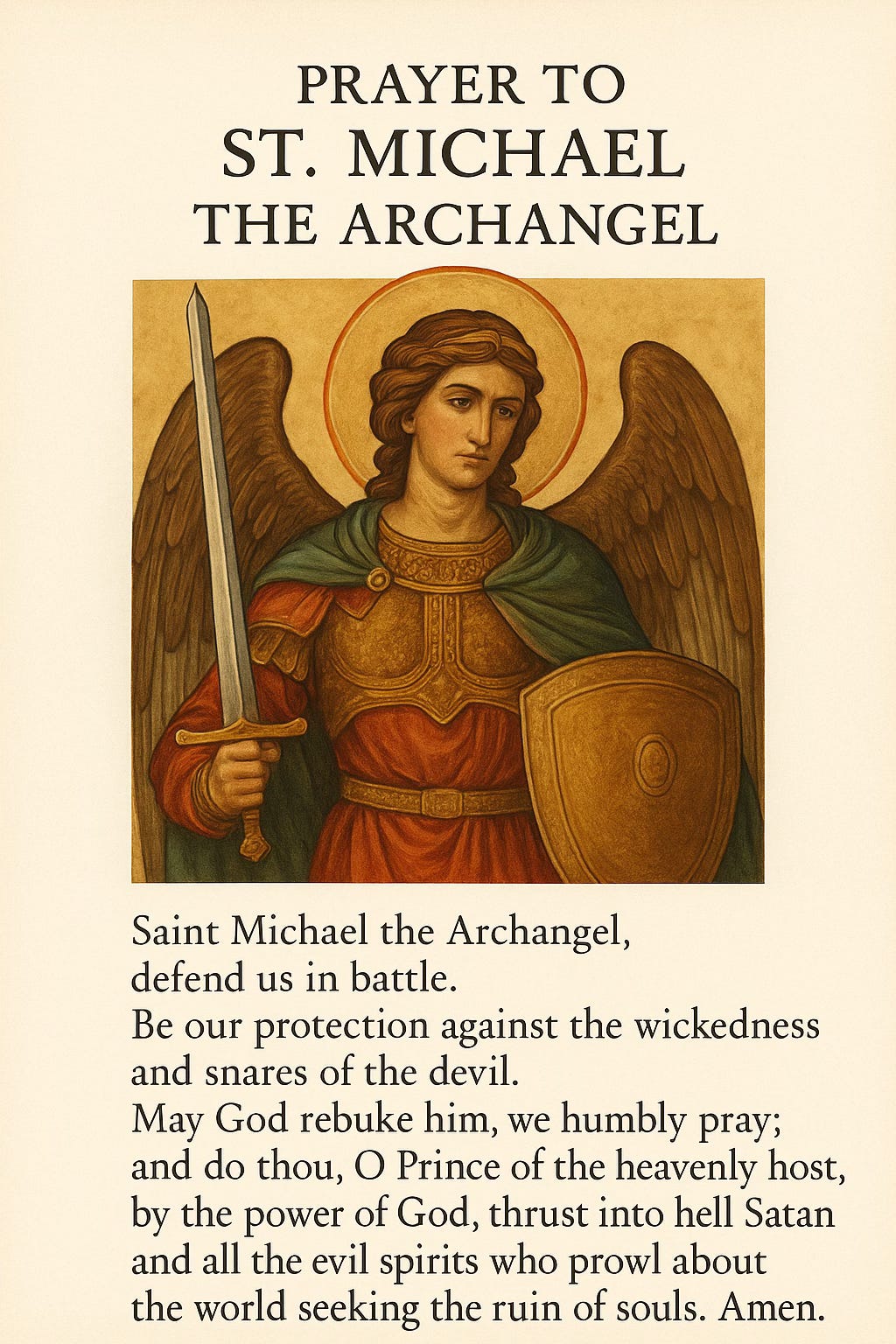
St. Michael the Archangel is a central figure in Christianity and also holds an honored place in Judaism and Islam. His name, meaning “Who is like God?”, reflects his steadfast loyalty to the Almighty. He is often depicted as a mighty, winged figure clad in armor and carrying a sword. Though never human, Michael—along with Gabriel and Raphael—is venerated as a saint in Catholicism and some other Christian traditions.
In the Hebrew Bible, particularly in the book of Daniel, Michael appears as a protector and defender of God’s people. In Daniel 10:13, an angel tells the prophet Daniel that he was delayed by the “prince of the kingdom of Persia” and needed Michael’s help to break through and deliver the message. This passage suggests Michael’s role in overcoming spiritual opposition—not only on behalf of humanity but also in aiding other angelic beings. In Daniel 12:1, Michael is described as “the great prince who has charge of your people,” standing with them in a time of unparalleled distress. These texts present Michael as a heavenly champion who defends the faithful against evil.
Michael also appears in Jewish tradition. The Talmud recounts that he supported Abraham in his confrontation with the wicked King Nimrod, helping him proclaim belief in the one true God. In these accounts Michael stands in God’s presence and receives divine knowledge. The Talmud names him alongside Gabriel, Uriel, and Raphael as a chief angel.
St. Michael and the Devil
In Christian tradition Michael’s role expands even further. He is portrayed as the leader of God’s army in the great battle described in Revelation 12:7-9, where he defeats the rebellious angel Lucifer—often identified with Satan—and casts him and his followers out of heaven. This victory, remembered as the War in Heaven, secured Michael’s place as a heavenly warrior and the patron saint of soldiers.
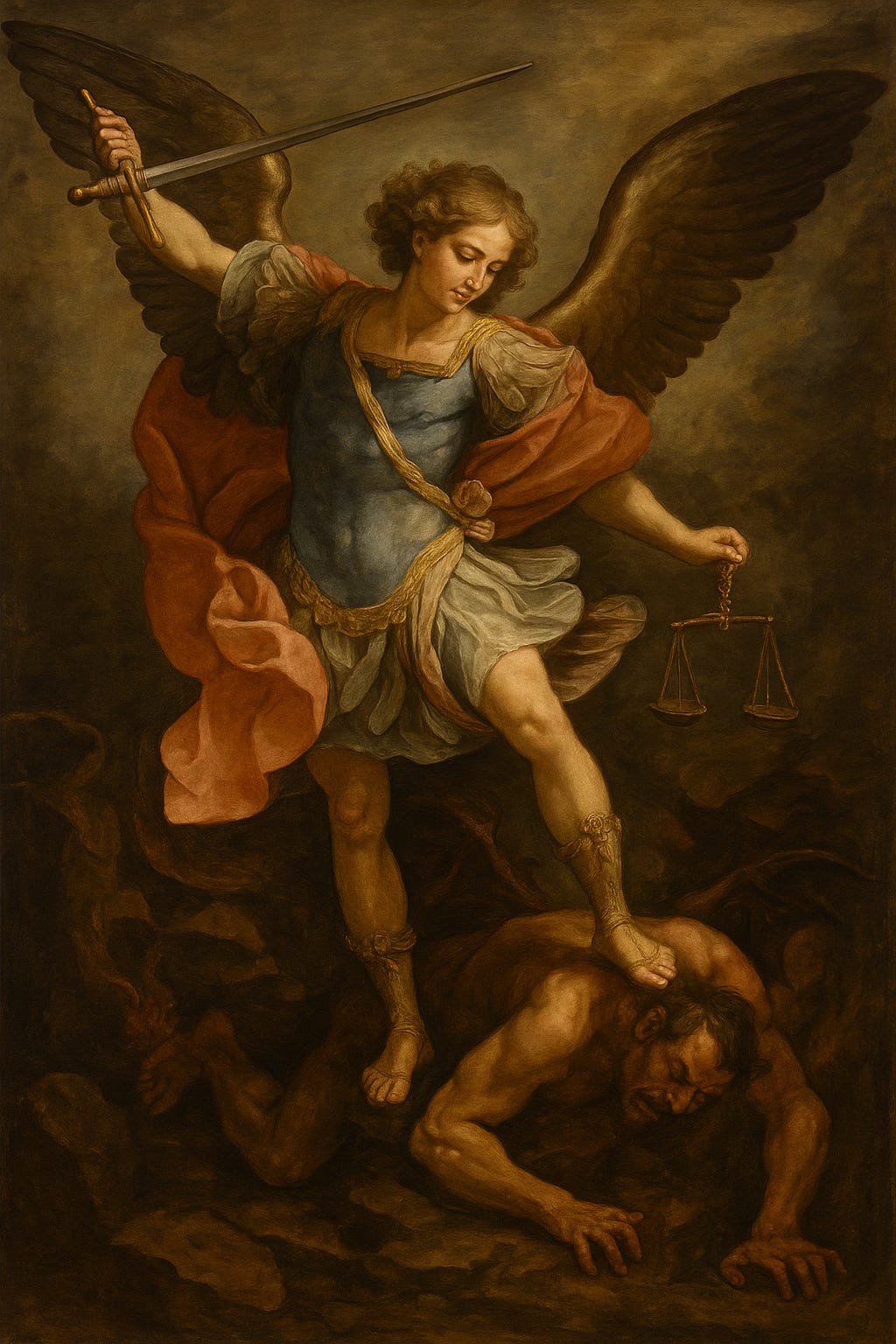
As noted earlier, the New Testament letter of Jude recalls Michael contending with the devil over the body of Moses. Later traditions tell of his appearances to key historical figures, including the Roman emperor Constantine the Great, which led to the conversion of a pagan shrine near Constantinople into a Christian sanctuary known as the Michaelion.
The Church also commemorates the Apparition of St. Michael on May 8, recalling visions reported at Mount Gargano in southern Italy between 492 and 496. These visitations were linked with miraculous events: a deflected arrow, victory in battle, and protection during a plague. Michael is also said to have guided St. Francis of Assisi in his spiritual mission, inspired Joan of Arc to rally behind Charles VII during the Hundred Years’ War, and defended the twentieth-century mystic St. Padre Pio against demonic attacks.
In Islam, Michael—known as Mikail—is revered as one of the four chief archangels, along with Jibril (Gabriel), Israfil, and Azrael. Islamic tradition describes Mikail as the angel of mercy, entrusted by Allah with providing sustenance and blessings to all living creatures, including bringing rain and fertility to the earth. While the Quran does not mention him by name, the Hadith literature emphasizes his role as a devoted servant of God, faithfully carrying out the divine will.
Across centuries Michael has inspired much devotion. Many churches, chapels, and monasteries were dedicated in his honor, particularly in medieval Europe. Magnificent sanctuaries such as Mont-Saint-Michel in France and St Michael’s Mount in England still testify to that veneration.
In Catholic tradition St. Michael is revered as a powerful intercessor, an angel of justice, and a protector of the Church. He is honored as the patron of soldiers, police officers, and first responders, who look to him as their defender in battle. He is also invoked as a guardian of the sick and the dying, believed to stand beside them at the hour of death to guide their souls. For centuries Christians have called on him for protection against evil spirits and as a shield for the whole Church in times of trial.
St. Gabriel: Herald of God’s Message
The Archangel Gabriel holds a central place in the Abrahamic faiths—Judaism, Christianity, and Islam—as the angel of revelation, mercy, annunciation, and resurrection.
In the Hebrew Scriptures Gabriel is not always named, yet many scholars believe he is the angelic figure who interprets Daniel’s visions in Daniel 8:15–26 and 9:20–27. In the book of Zechariah (1:7–17; 2:1–13; 5:1–11), various angelic messengers appear, and Gabriel is traditionally identified as one of these divine couriers. In the Talmud he is described as one of the angels standing on the left side of God’s throne. Midrashic texts also mention Gabriel. In Midrash Tadshe (Genesis Rabbah 32:5), he offers divine guidance to Hagar, the mother of Abraham’s son Ishmael.
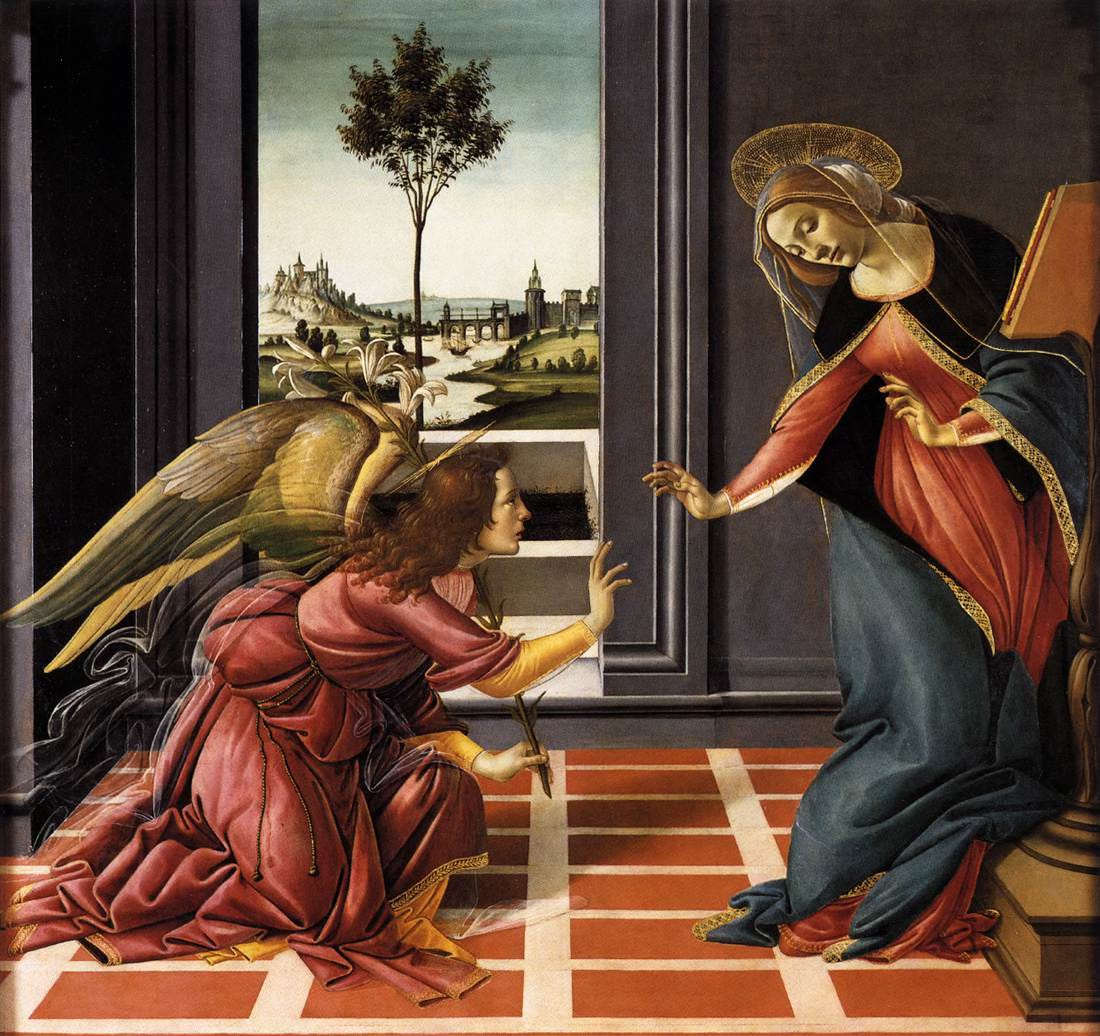
In the New Testament Gabriel is the herald of the Incarnation. In the Gospel of Luke he first appears to Zechariah in the temple to announce that his wife, Elizabeth, will conceive John the Baptist despite her old age. Gabriel then appears to Mary of Nazareth to announce that she will conceive by the Holy Spirit and bear the Son of God. These scenes—the Annunciation to Zechariah and the Annunciation to Mary—mark Gabriel as the angelic messenger of salvation history.
In Islamic tradition Gabriel is known as Jibril, regarded as one of the most important archangels. He is believed to have brought the revelation of the Quran to the Prophet Muhammad over a period of twenty-three years, transmitting the divine word that would shape the Islamic faith.
Throughout the centuries Gabriel has been a prominent figure in Christian art and literature. Artists often depict him as a radiant figure with dramatic wings and flowing robes, sometimes holding a lily, symbolizing purity, or a trumpet, signifying his role as a herald of divine announcements. Celebrated depictions include Leonardo da Vinci’s Annunciation and Sandro Botticelli’s Cestello Annunciation. In John Milton’s Paradise Lost, Gabriel appears as a loyal messenger and guardian in heaven, participating in events such as the War in Heaven and the expulsion of Adam and Eve from Eden.
St. Raphael: Guide and Healer
The Archangel Raphael is revered in Judaism, Christianity, and Islam as a divine messenger of healing. His name in Hebrew means “God heals” or “He who heals.”
Raphael’s best-known appearance is in the Book of Tobit, part of the Biblical canon in Roman Catholic and Orthodox traditions but considered apocryphal by most Protestants and by Judaism. The story is both dramatic and tender. Tobit, a devout Israelite of the tribe of Naphtali living in exile in Nineveh, is blinded when bird droppings fall into his eyes. Despite his misfortune he continues to bury the dead in defiance of the king’s orders, an act of mercy that brings him persecution.
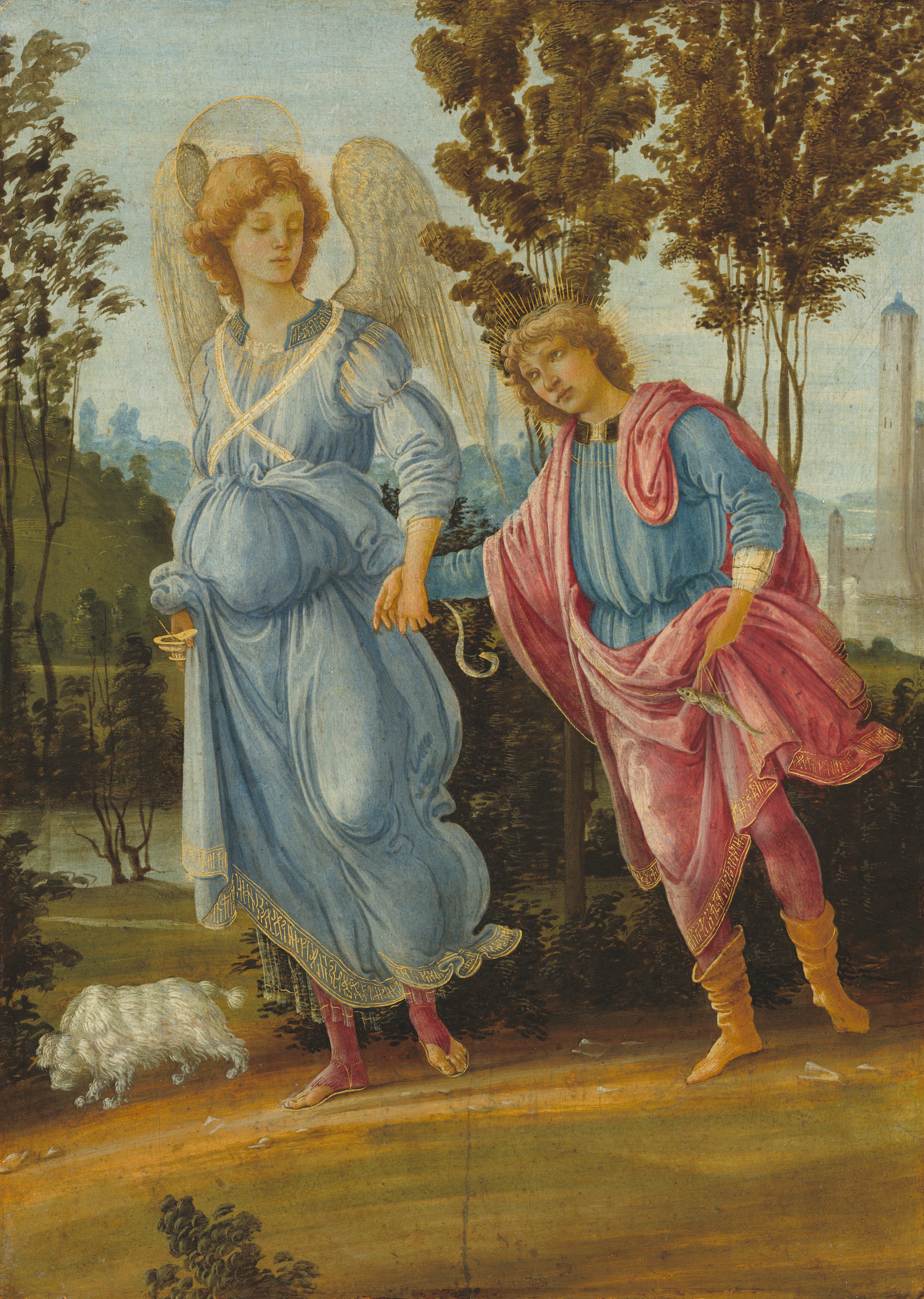
In another city a young woman named Sarah suffers under the oppression of a demon named Asmodeus, who kills each of her seven husbands on their wedding night before the marriages can be consummated. Meanwhile Tobit asks his son, Tobias, to retrieve money left in trust in a distant city. God sends Raphael, disguised as a relative named Azarias, to accompany the young man.
During their journey a large fish attempts to attack Tobias in a river. At Raphael’s instruction Tobias catches the fish and preserves its heart, liver, and gallbladder. These will later play a crucial role. When Tobias meets Sarah, Raphael arranges their marriage and instructs the couple to burn the fish’s heart and liver while praying together. The smoke drives out the demon, which Raphael binds in the desert of Egypt.
On returning home Raphael guides Tobias to use the fish’s gallbladder on his father’s eyes, restoring Tobit’s sight. At the end of the story Raphael reveals his true identity, telling Tobit and Tobias that God heard their prayers and remembered their good deeds. He urges them to proclaim God’s wonders before departing for heaven. The tale highlights faith, divine mercy, and the protective role of angels.
Raphael also appears in the Book of Enoch, an influential, apocalyptic Jewish text outside the Biblical canon. In this work Raphael, confronts the demon Azazel, one of the fallen Watchers who taught humans forbidden arts such as warfare and the use of cosmetics for seduction. Raphael binds Azazel in a desolate place beneath jagged rocks to await the final judgment and helps heal the earth after the corruption caused by the Watchers and their offspring, the Nephilim.
Though Raphael is not named in the Quran, many Islamic scholars associate him with Israfil (also spelled Israfel), the angel who will sound the trumpet to announce the Day of Judgment in Islamic eschatology.
In religious art Raphael is often shown carrying a staff, symbolizing his guidance, and/or a fish, recalling his aid to Tobias and Sarah. He is venerated as the patron of travelers, the blind, health-care workers, and matchmakers, and is frequently invoked for help in matters of healing.
All this history is fascinating (at least to me), but it’s worth remembering that the archangels are not just legendary figures. For people of faith, they are living, supernatural realities, companions you can call on in times of need, especially when you want to give your prayers a gentle, angelic boost.
Here’s a simple exercise you can use to connect with the Archangels:
Find a quiet moment in your day and center yourself in silence and prayer.
Whether you’re having a good day or a hard one, begin by giving thanks to God.
Ask God for peace and guidance.
Speak directly to the archangel you most need:
Ask St. Michael for protection.
Ask St. Gabriel for clarity and courage in saying yes to God’s call.
Ask St. Raphael for healing of body or spirit.
Close by entrusting your intention fully to God’s will.
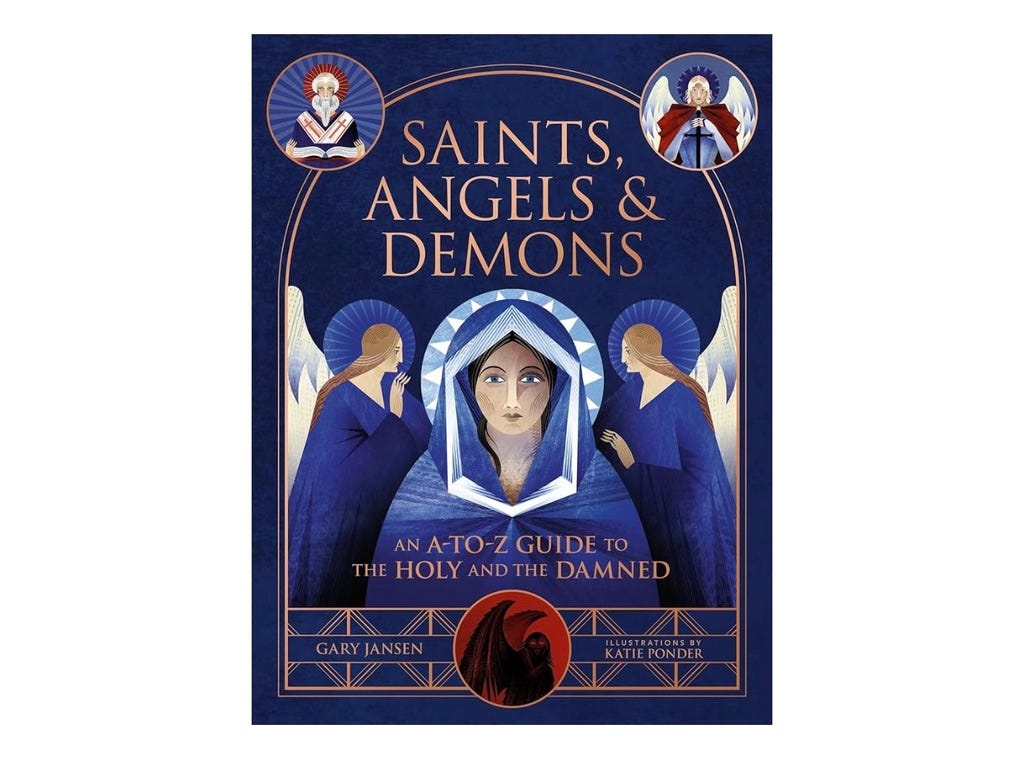
If you’d like to go deeper into the lives of these archangels and many other holy figures, take a look at my book Saints, Angels & Demons: An A-to-Z Guide to the Holy and the Damned, which explores their stories, their roles in Scripture and tradition, and the ways they continue to inspire us today.