New Year, New You? Try Something Small...
14 MicroShifts for a Happier Life

Ah, a new year is just upon us! And with that new year come expectations for change. Every January, many of us feel pressure to make big changes at the start of a new year. As someone who has worked in publishing for years, this is the time of New Year, New You promotions, where we try to sell our best self-help books to help facilitate those changes. New habits. New bodies. New lives. All this new.
I’ve felt those pressures myself, and more often than not they leave me overwhelmed before I’ve even begun. The problem isn’t that we fear change, as so many have said over the years. It’s that we assume change has to be dramatic to be real. And that can feel heavy and burdensome.
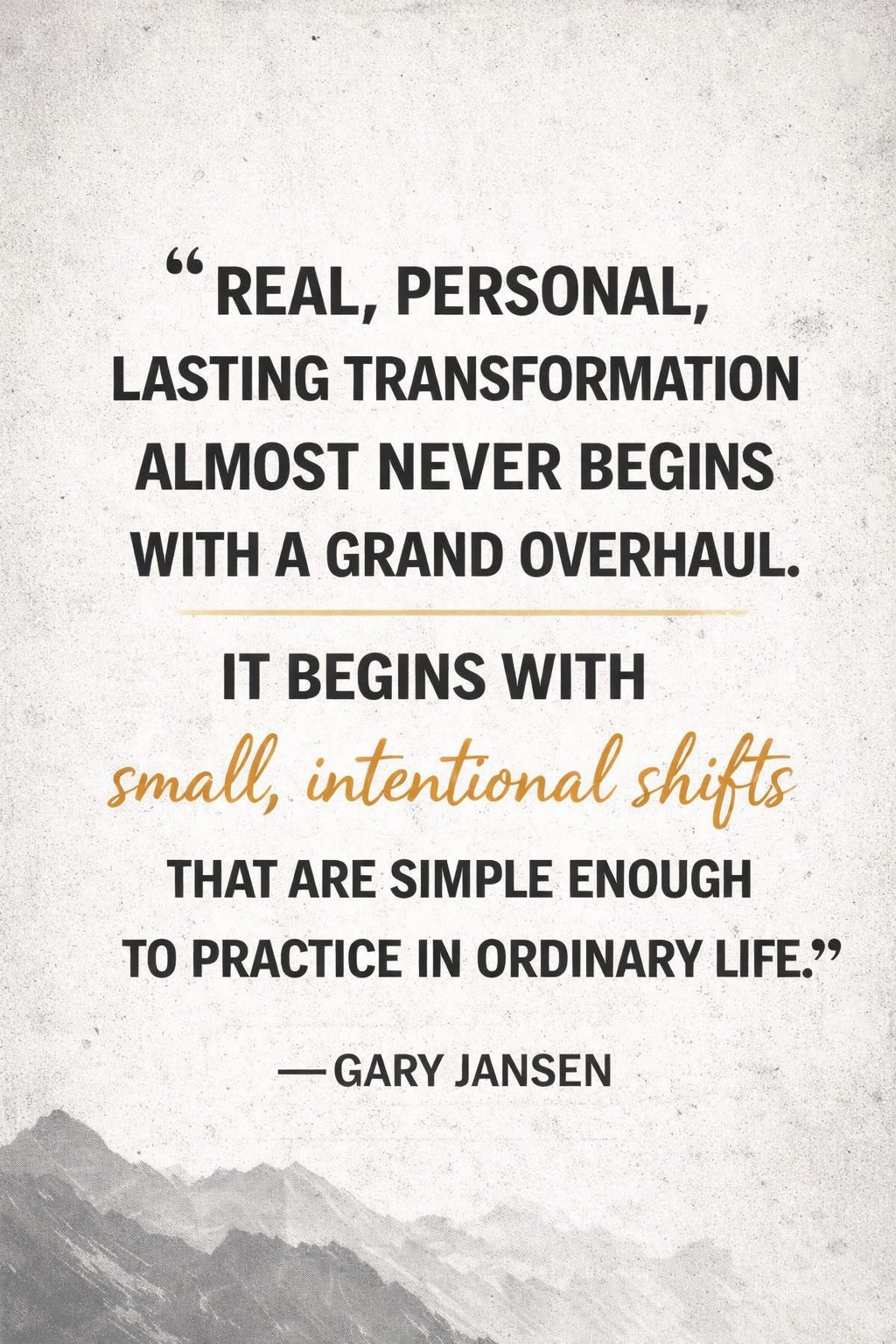
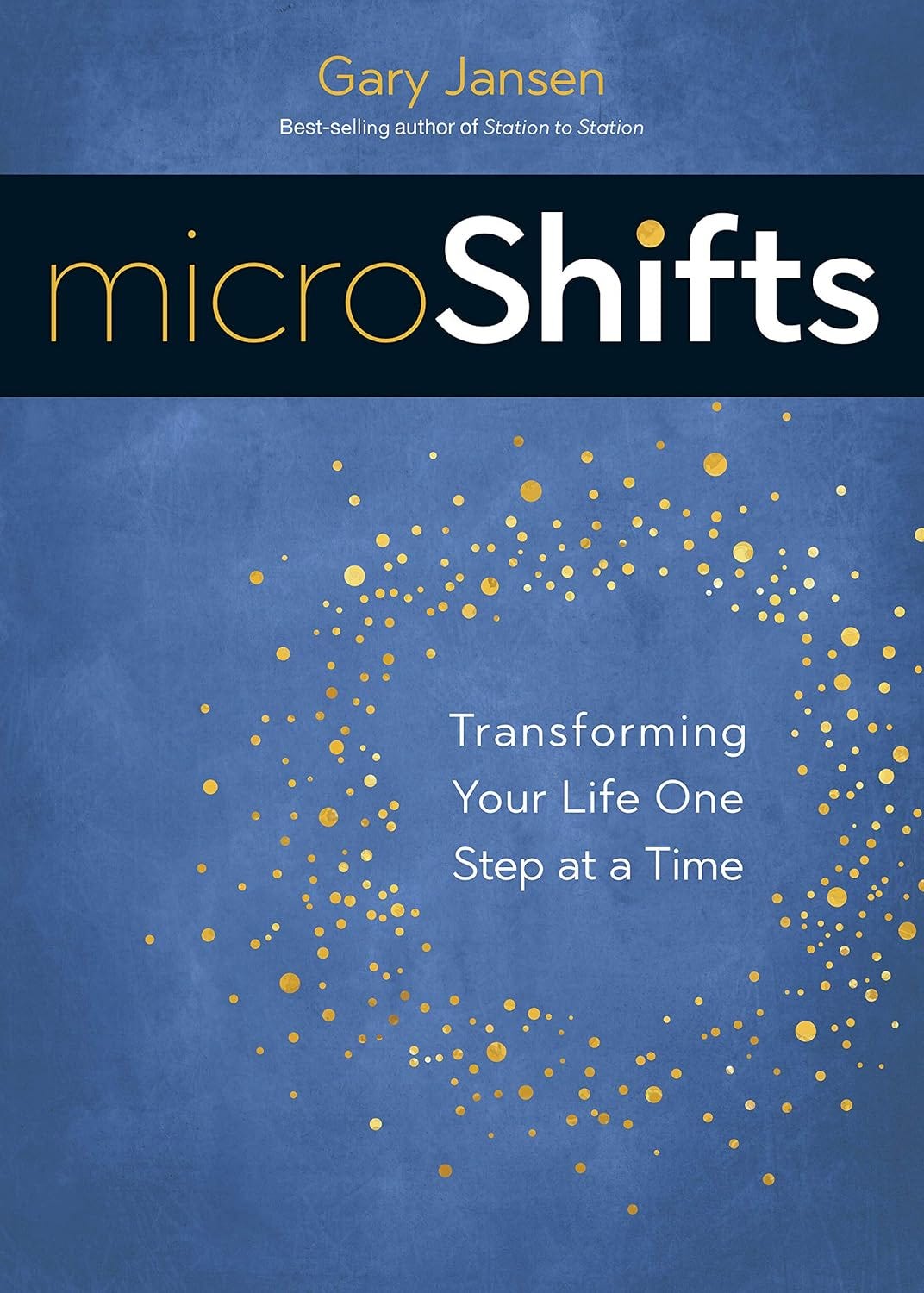
What I’ve learned, and what I explore in my own spiritual self-help book MicroShifts (shameless plug), is that real, personal, lasting transformation almost never begins with a grand overhaul. It begins with small, intentional shifts that are simple enough to practice in ordinary life. A smile instead of a scowl. A shift from irritation to patience. A kind response to a stranger when no one is watching. These microshifts don’t feel heroic, but they work quietly and consistently, and ultimately reshape how we move through the world and how the world responds to us.

Few of us wake up in the morning and say, “I’m going to be a bad person today.” Most days we’re just trying to get out of bed and make it through life. But what if, as we step into a new year, we set aside New Year’s resolutions and simply became a little more intentional in our actions and reactions? What if, instead of trying to reinvent ourselves, we focused on being slightly better versions of who we already are? Even that might feel a little daunting, but why not give it a shot? I honestly believe that if enough of us committed to small acts of goodness and graciousness, especially in our wildly polarizing times, we could change far more than just our own lives.
Without further ado, here are 14 microshifts to consider today and always.
1. Be kind to others
At their core, all of the MicroShifts that follow originate from a place of kindness. It’s so essential, so foundational, that it deserves to lead the pack. Be kind. to people, to animals, and even to yourself.
2. Treat others the way you want to be treated
Did you ever hear the story about the priest who gave the same sermon every Sunday for a year? One of the parishioners finally asked the priest why he kept repeating his talk over and over again, to which the good pastor replied, “I’ll write a new sermon once you all start listening to and living out the old sermon.” Well, the Golden Rule is centuries old, and yet we still struggle to live it out. Treat others the way you want to be treated. It’s that simple.
Do you like being lied to? Probably not. Then don’t lie to other people. Do you like to be thanked when you do something for someone else? Then make sure you thank anyone who helps you throughout the day. Hate it when someone won’t let you merge on the highway? Then don’t cut off others or be inconsiderate when you drive. And for Pete’s sake, be honest. As TV’s Judge Judy says, “Don’t pee on my leg and tell me it’s raining.”
3. Say hello
Make eye contact and say hello, not just to family, friends, and colleagues, but to strangers too. Of course, use good judgment. Many people have learned to be careful about their hellos, as they can invite unwelcome attention. As someone who worked for years in New York City, I get it. But that postal clerk who must repeat the same questions about whether your package contains anything fragile, liquid, perishable, or potentially hazardous? She probably hears those words in her dreams. Say hello to her. And say hello as if you mean it.
4. Say hello right back
If you’re at work, school, or some kind of social situation and someone says hello to you first, don’t look down, don’t look behind you, don’t look away, and don’t look at him as if he might be a wacko. Just say hello. Again, if the person looks like trouble, you have to decide whether responding is the right thing to do. But most of the time, someone is simply reaching out.
A hello is a request to connect. Maybe the person has good energy and is willing to share some with you. Or maybe they need a quick shot of yours. Either way, consider every hello a potential gift. Sometimes you’re the recipient; sometimes you’re the giver.
I often say good morning to everyone I meet on the street as I walk through my neighborhood to the train. Half of those greetings go unanswered, but the ones that are returned make me feel really good about life. It’s just a couple of simple words, but it feels good to hear them come back to me.
5. Smile
As Mother Teresa once said (or at least it’s attributed to her), “Peace begins with a smile.” When you start paying attention to saying hello, notice whether the smile on your face reflects a sincere intention to spread goodwill.
You know that feeling when you tense up around angry-looking people? Don’t be that person who makes others want to flee. If you’re shy and it feels outrageously bold to smile at a stranger, practice. Start with three people a day. Then four. Five. Six. Challenge yourself. And if, like me, you have weird teeth, email me and I’ll coach you on the perfect closed-mouth smile.
6. Be polite
Say thank you when someone does something for you, no matter how small. If a waiter pours water into your glass, say thank you. Greet security guards with “good morning” or “good evening,” making eye contact when you do. If someone holds the door for you, take a moment to show your appreciation.
7. Respect your elders
We’ve lost this tenet of basic civility. When you speak to people much older than you, address them as “ma’am” or “sir.” Keep your attitude in check, even if the person in question is a crab. Respect people who, more often than not, know a lot more than you do. They’ve been granted the gift of long life, and that experience should count for something.
8. Be nice to animals
Pope Francis once made this point beautifully: “Because all creatures are connected, each must be cherished with love and respect, for all of us as living creatures are dependent on one another.” As Stan Lee used to say, “Nuff said.”
9. Don’t lie (or seriously try not to)
Most of us have told lies or stretched the truth to avoid punishment, embarrassment, or other negative consequences. If you mess up, admit it. Almost always, people can tell when they’re being lied to. When we admit our mistakes, most people respond with forgiveness, or at least understanding.
10. Be patient with yourself and others
Patience isn’t passive. It’s a way of interrupting stress before it takes over. Slowing down, just a little, changes how we experience the moment and how others experience us. Most situations aren’t emergencies. When we act like they are, we pay the price. Choose steadiness over speed.
11. Listen to people
We’re all busy, but do your best to really listen. When someone is talking, let them know you’re listening. Put the phone down. Make eye contact. People need to be heard.
Listen, and this part is important, refrain from offering your opinion unless it’s requested (husbands, you know what I’m talking about). When you do respond, make it about what they’ve said, not about something similar that happened to you. Otherwise, you’re engaging in “parallel communication,” like toddlers engaged in parallel play. They’re near each other, but they’re not really connecting. Sometimes it’s not about us. Sometimes it’s all about the other person.
12. Cultivate forgiveness
Notice that I say cultivate forgiveness. Full forgiveness is often a macroshift, especially when the hurt runs deep. It can take years. People will hurt you. Some are easy to forgive; others, not so much. Usually, though not always, people don’t realize the harm they’ve caused. Try to give the benefit of the doubt without letting others walk all over you. Sometimes simply asking whether forgiveness is possible is enough to move you toward healing.
13. Either keep your promises or stop making them
A promise is an oath, spoken or written, between two parties. Keep your word, or stop making promises you can’t fulfill. I’m an optimist and a romantic, so I tend to overestimate what I can live up to. I stopped making promises I couldn’t keep when I realized my ideals needed to be more grounded in reality.
14. Take a breath—intentionally.
As someone who teaches meditation, I can’t overstate how important intentional breathing is for our health, for body, mind, and soul. We breathe all day long, of course, but rarely with awareness. This MicroShift invites you to change that.
Set aside a few moments each day to take a breath with purpose. Then take another. And another. Simple vagal breathing, which helps stimulate the parasympathetic nervous system, can do wonders when we’re feeling anxious, irritated, or overwhelmed. Breathe in to the count of seven. Breathe out to the count of eight.
That’s it. Simple. Effective. And, over time, genuinely life-changing.
New Year’s blessings to you!
For more, check out more reflections in my spiritual self-help book, MicroShifts.
Happy New Year, Gary. I appreciate the insistence on smallness, especially at a time when everything is pushing us toward dramatic reinvention. Reading your Rosary book now, and this feels like the same wisdom expressed in everyday dynamics: attention, kindness, repetition. Thank you for this!
Love this, Gary! Happy New Year!! Thank you for your part in making my 2025 so special.